AN
 Free
Gidan littattafan Hausa na zamani
FreeDescription
Purpose
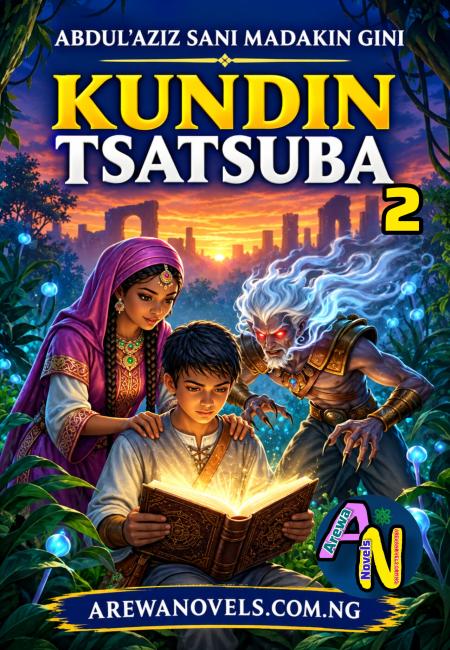
Provide a comprehensive, highly structured, and culturally contextualized literary breakdown of "Kundin Tsatsuba" (Littafi Na Biyu, Part A & B) by Abdul'Aziz Sani Madakin Gini. This guide organizes the text for readers, researchers, and enthusiasts of Hausa epic fantasy literature, extracting narrative significance, character arcs, and thematic depth.
About
"Kundin Tsatsuba" (Littafi Na Biyu) is a masterclass in modern Hausa epic fantasy and supernatural adventure. Written by renowned author Abdul'Aziz Sani Madakin Gini, the story continues the high-stakes saga of magic, ancient secrets, cosmic battles, and supernatural entities. Part A and Part B bridge past actions with current disasters, shifting the narrative scale from mortal realms to the mysterious, distant island of Baharzus and the grand halls of the supreme sorcerer-jinn, Sarki Shamharu.
Why Is the Book Called "Kundin Tsatsuba"?
Kundin Tsatsuba translates roughly to "The Compendium of Occult/Mystical Secrets" or "The Book of Deep Arcane Lore."
- The Origin: Compiled over 80 years by the scholar-researcher Ruzyal (Abul-Hikima), the book contains one thousand esoteric accounts, supernatural histories, and mystical secrets gathered from across the world.
- The Danger: Because the book holds the key to Shamharu's absolute dominion over the mortal and spiritual planes, it represents an existential threat to dark forces. Its unauthorized opening by Ruzyal's son, Jafaru, and Yalisa using the legendary key Miftahuzzarbil threatens to expose the hidden architecture of dark magic, sparking an empire-wide manhunt and a race against time.
Main Characters to Know
- Ruzyal (Abul-Hikima): The veteran researcher and author who spent eight decades documenting mystical lore. Kidnapped and brought to Baharzus, he now faces the terrifying task of rewriting a second Kundin Tsatsuba under duress.
- Sarki Shamharu: The supreme king of jinn sorcery residing on the island of Baharzus. Powerful, arrogant, and deeply opposed to Islam and humanity, he operates as the supreme antagonist manipulating world events from the shadows.
- Aljani Ramdakagū: A colossal, multi-winged, multi-armed jinn capable of traversing vast cosmic distances in mere seconds. He serves as Shamharu's swift executor of punishment and transport.
- Boka Hajarul Munkurus: The sixty-third sorcerer visited by Ruzyal who mistakenly believed his powders could block all jinn. Captured alongside Ruzyal, he serves as a cautionary figure of human hubris facing cosmic wrath.
- Lu'umanu (of Tehran): A human monarch whose body serves as a vessel for multiple spiritual entities governed by Shamharu. His political and physical battles against heroes like Hubairu bn Mas'ud form a parallel frontline in Shamharu's war.
- Markahussabus & Princess Sima: Markahussabus is the operative who captured Princess Sima, setting off a politically charged abduction aimed at forcing dynastic marriages and further entangling mortal kingdoms in the jinn conflict.
- Samaratu & Lushiza: Samaratu (Markahussabus's mother) and her attendant Lushiza, whose eager anticipation of Markahussabus's return closes out Part B.
Reading Notes
- The Cosmic Scale of Time and Space: The narrative emphasizes the terrifying abyss separating the mortal world from the island of Baharzus—a distance evaluated as a thousand years of travel, crossed in seconds by entities like Ramdakagū.
- Thematic Conflict of Knowledge vs. Suppression: Shamharu’s core motivation reveals a paranoid desire to maintain absolute ignorance among humans. By attempting to force the creation of a second Kundin Tsatsuba to overwrite the first, Shamharu highlights the thematic power of written history as a weapon of liberation.
- The Metaphor of the Duplicate Souls: The revelation of the 999 glass chambers containing identical spiritual matrices for Lu'umanu underscores how mortal rulers are often mere puppets in a grand, calculated celestial chess game.
Hausa Terms and Cultural Context
- Sulusainin dare: The final third of the night—a spiritually charged hour in Islamic tradition often associated with descending divine mercy, answered prayers, and midnight vigils.
- Bokaye / Boka: Traditional practitioners of divination, sorcery, or occult arts (sing. boka). In Hausa literature, they often bridge the mortal world and the hidden realm of spirits, though they frequently find themselves outmatched by genuine jinn forces.
- Aljani: Supernatural spiritual beings created from smokeless fire, capable of immense power, shifting forms, and interacting with the human world.
- Miftahuzzarbil: The mystical key (kuba) used to seal and unlock the secrets contained within the esoteric texts.
- Baharzus: A mythical, isolated island dimension operating under laws entirely divorced from normal geographical coordinates.
Questions the Story Raises
- Can History Be Erased? When Shamharu demands that Ruzyal recreate an exact copy of the lost knowledge from oral descendants, it raises the philosophical question: Can suppressed knowledge truly be reclaimed once the original witnesses have passed?
- The Nature of Free Will: With Lu'umanu and other monarchs manipulated by thousandfold spiritual reserves, to what extent do mortal leaders exercise true autonomy in Hausa epic narratives?
- The Role of Faith: Shamharu explicitly notes that Islam and Muslims are the ultimate obstacle to his global domination. How will the spiritual resilience of characters like Hubairu bn Mas'ud stand against manufactured royal puppets?
About the Author
Abdul'Aziz Sani Madakin Gini is a celebrated voice in contemporary Hausa literature (Littattafan Hausa). Hailing from a rich tradition of imaginative storytelling, his works are widely read across northern Nigeria and digital diaspora platforms, renowned for their intricate plotting, deep integration of cultural and Islamic motifs, and high-stakes supernatural world-building.
What Makes This Page More Valuable Than a Translated Excerpt?
- Contextual Depth: Rather than a simple word-for-word translation, this guide decodes the rich tapestry of Hausa cultural markers (sulusainin dare, traditional roles of bokaye, Islamic cosmological undertones) that raw machine translation misses.
- Structured Navigation: It organizes dense episodic serializations (Part A & B) into clear thematic categories, making it an indispensable companion guide for active readers and reviewers.
- Character Mapping: It connects disparate plot threads—from Ruzyal's captivity to Lu'umanu's vessel status and Markahussabus's return—giving readers an immediate bird's-eye view of a complex web of alliances.
Recommended Public Page Order
For an optimal reading and archival experience of the Kundin Tsatsuba series online or in print publications, pages should be sequenced as follows:
- Title & Administrative Metadata (Author, Typist, Poster credits, and engagement notes).
- Purpose & Executive Summary (Why the chapter matters to the ongoing plot arc).
- Primary Text Serialization (Parts A & B).
- Cultural & Linguistic Glossary (Explaining terms like Sulusainin dare and Baharzus).
- Character Spotlight & Status Board.
- Analytical Reading Notes & Discussion Questions.